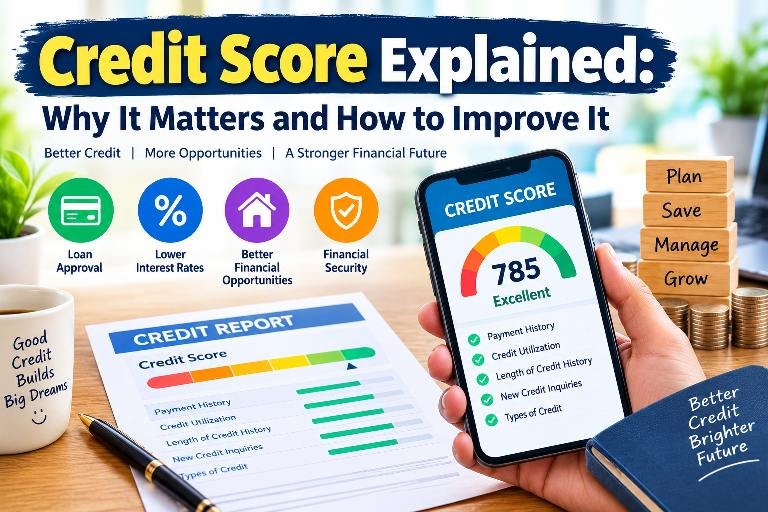
A credit score is one of the most important numbers in personal finance. It can influence whether you are approved for a loan or credit card, the interest rate you may receive, and sometimes even how easily you can access financial services. Despite its importance, many people do not fully understand how credit scores work or how their financial habits affect them.
Understanding your credit score can help you make better borrowing decisions and build a stronger financial future.
What Is a Credit Score?
A credit score is a numerical representation of your credit history and borrowing behaviour. Financial institutions use credit scores to assess the level of risk associated with lending money to an individual.
The score is generally calculated using information such as your repayment history, outstanding debt, credit utilisation, length of credit history, and applications for new credit. Different countries and credit bureaus may use different scoring systems and ranges.
A higher score generally indicates a stronger credit profile, while a lower score may make borrowing more difficult or expensive.
Why Is a Credit Score Important?
Your credit score can play an important role when you apply for a personal loan, home loan, vehicle loan, or credit card. Lenders may use it along with your income, existing liabilities, employment details, and other information when evaluating your application.
A strong credit profile can improve your chances of getting approved and may help you qualify for more favourable loan terms. On the other hand, a poor credit history can result in higher borrowing costs or reduced access to credit.
However, a credit score is only one part of the lending decision. A good score does not guarantee loan approval.
Major Factors That Affect Your Credit Score
1. Payment History
Making loan and credit-card payments on time is one of the most important aspects of maintaining a healthy credit profile. Missed or delayed payments can negatively affect your credit history.
Setting up payment reminders or automatic payments can help reduce the risk of forgetting a due date.
2. Credit Utilisation
Credit utilisation refers to how much of your available revolving credit you are currently using. For example, if your credit limit is ₹1,00,000 and your outstanding balance is ₹30,000, your utilisation is 30%.
Keeping your utilisation under control can demonstrate responsible use of available credit.
3. Length of Credit History
A longer, well-managed credit history can provide lenders with more information about your borrowing behaviour. Closing old accounts unnecessarily may therefore deserve careful consideration, particularly if they have a positive history.
4. New Credit Applications
Applying for several credit products within a short period may result in multiple credit enquiries. Too many applications can sometimes signal increased dependence on borrowing.
It is generally better to apply for credit when there is a genuine financial need.
5. Types of Credit
Having experience with different types of credit may contribute to a well-rounded credit profile. However, you should never borrow money simply to create a credit mix. Taking on unnecessary debt can create financial problems.
How to Improve Your Credit Score
Improving a credit score usually takes time and consistent financial behaviour. Start by paying every bill and loan instalment on time. Review your credit report periodically and check for incorrect information or accounts that do not belong to you.
Try to keep outstanding balances under control and avoid taking multiple loans unless they are genuinely necessary. If you already have significant debt, creating a repayment plan can help you gradually improve your financial position.
It is also important to avoid companies or individuals promising an instant improvement in your credit score. Legitimate credit improvement generally depends on correcting errors and developing responsible financial habits.
Credit Score and Financial Planning
A healthy credit profile should be considered part of a broader financial plan. Building an emergency fund, controlling expenses, reducing high-interest debt, saving regularly, and investing according to your financial goals are equally important.
A credit score is not a measure of your overall wealth. Someone can have a high credit score while carrying substantial debt, while another person may have limited credit history simply because they have rarely borrowed money.
The goal should therefore be responsible financial management rather than chasing a particular score.
Conclusion
A credit score can significantly influence your borrowing experience, but maintaining a healthy financial profile requires more than simply monitoring a number. Paying bills on time, managing credit responsibly, limiting unnecessary borrowing, and reviewing your credit report regularly can help build stronger financial habits.
The most effective approach is to treat credit as a financial tool rather than as additional income. When used responsibly, credit can support important goals such as buying a home, financing education, or managing major expenses without putting your long-term financial stability at unnecessary risk.