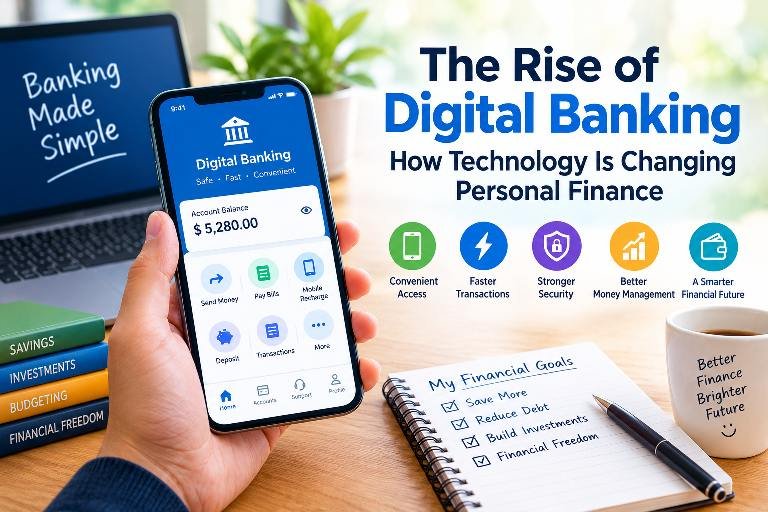
The financial world has changed significantly over the past decade. Traditional banking is no longer the only way people manage their money. With the rapid growth of smartphones, internet connectivity, and financial technology, digital banking has become an important part of everyday financial life.
What Is Digital Banking?
Digital banking allows customers to access banking services through websites and mobile applications without visiting a physical bank branch. Users can check their account balance, transfer money, pay bills, deposit funds, and manage other financial activities directly from their smartphones or computers.
The convenience of digital banking has made financial services faster and more accessible, particularly for people who prefer managing their finances online.
Benefits of Digital Banking
One of the biggest advantages of digital banking is convenience. Customers can perform financial transactions at almost any time without waiting in long queues or depending on branch opening hours.
Digital banking can also make it easier to monitor spending. Many banking applications provide transaction histories, spending summaries, alerts, and budgeting features. These tools can help users understand where their money is going and make better financial decisions.
Another important benefit is speed. Digital payments and online transfers can often be completed within seconds or minutes, making them useful for everyday purchases, bill payments, and money transfers.
The Importance of Financial Security
While digital banking offers many advantages, security should always be a priority. Customers should use strong and unique passwords and avoid sharing their banking credentials, PINs, or one-time passwords with anyone.
It is also important to be careful with suspicious emails, text messages, and links that request financial information. Scammers often use fake websites and messages to steal sensitive information.
Enabling two-factor authentication, keeping banking applications updated, and regularly checking account transactions can provide additional protection.
How Digital Banking Supports Better Money Management
Digital banking is not only about making payments. It can also help people develop better financial habits. Instant transaction notifications can make users more aware of their spending, while automatic transfers can help them save money regularly.
Some financial applications also provide tools for tracking expenses and setting financial goals. When used responsibly, these features can help individuals create a more organized approach to saving and spending.
The Future of Digital Finance
The future of finance is likely to become even more technology-driven. Artificial intelligence, automation, digital wallets, and personalized financial tools are expected to play a growing role in how people manage their money.
However, technology should be viewed as a tool rather than a substitute for financial knowledge. Users still need to understand their income, expenses, savings, investments, and financial risks.
Conclusion
Digital banking has transformed the way people interact with financial services. Its convenience, speed, and money-management features make it an increasingly important part of modern finance. By using digital banking responsibly and following basic security practices, individuals can take greater control of their everyday finances while building healthier long-term financial habits.